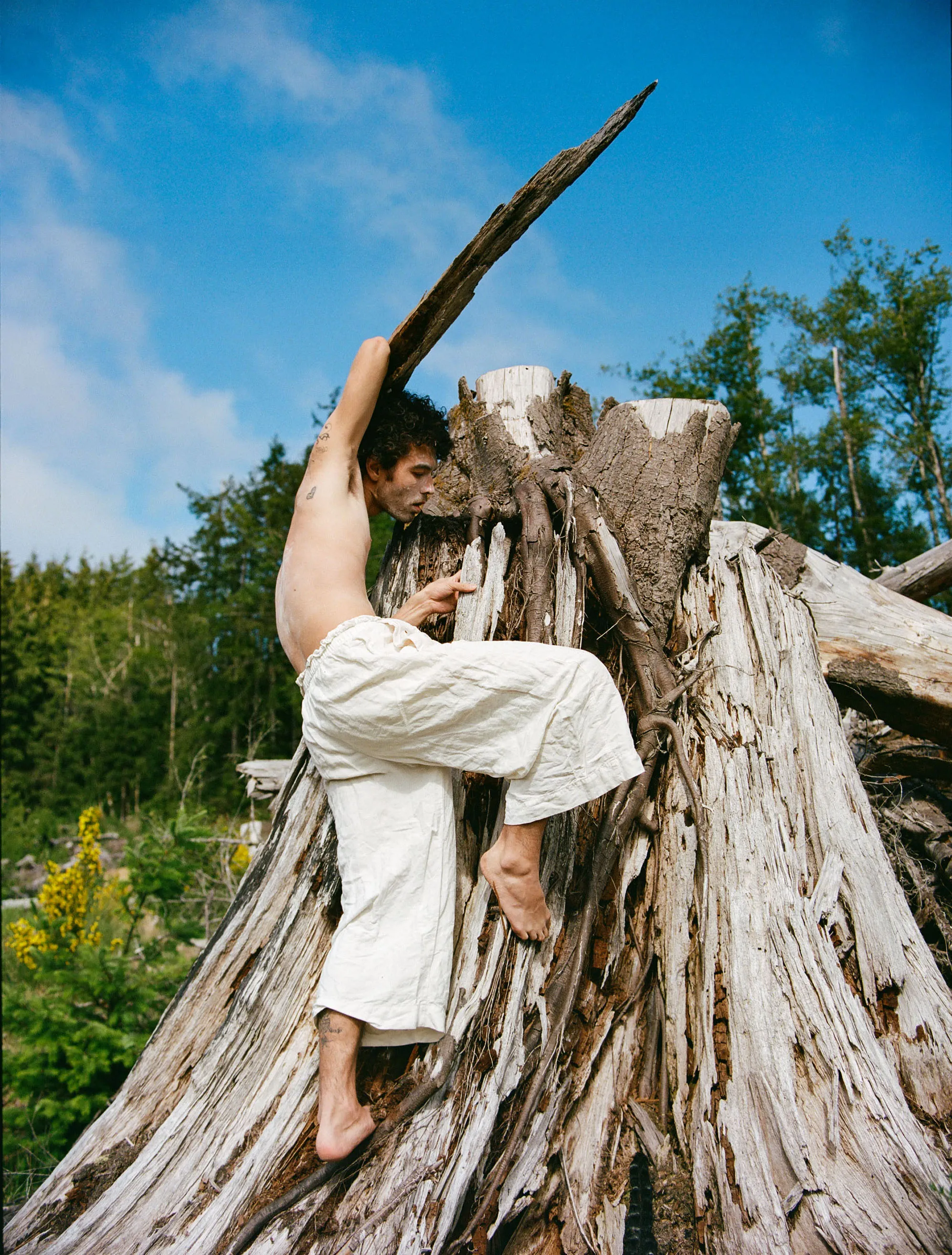
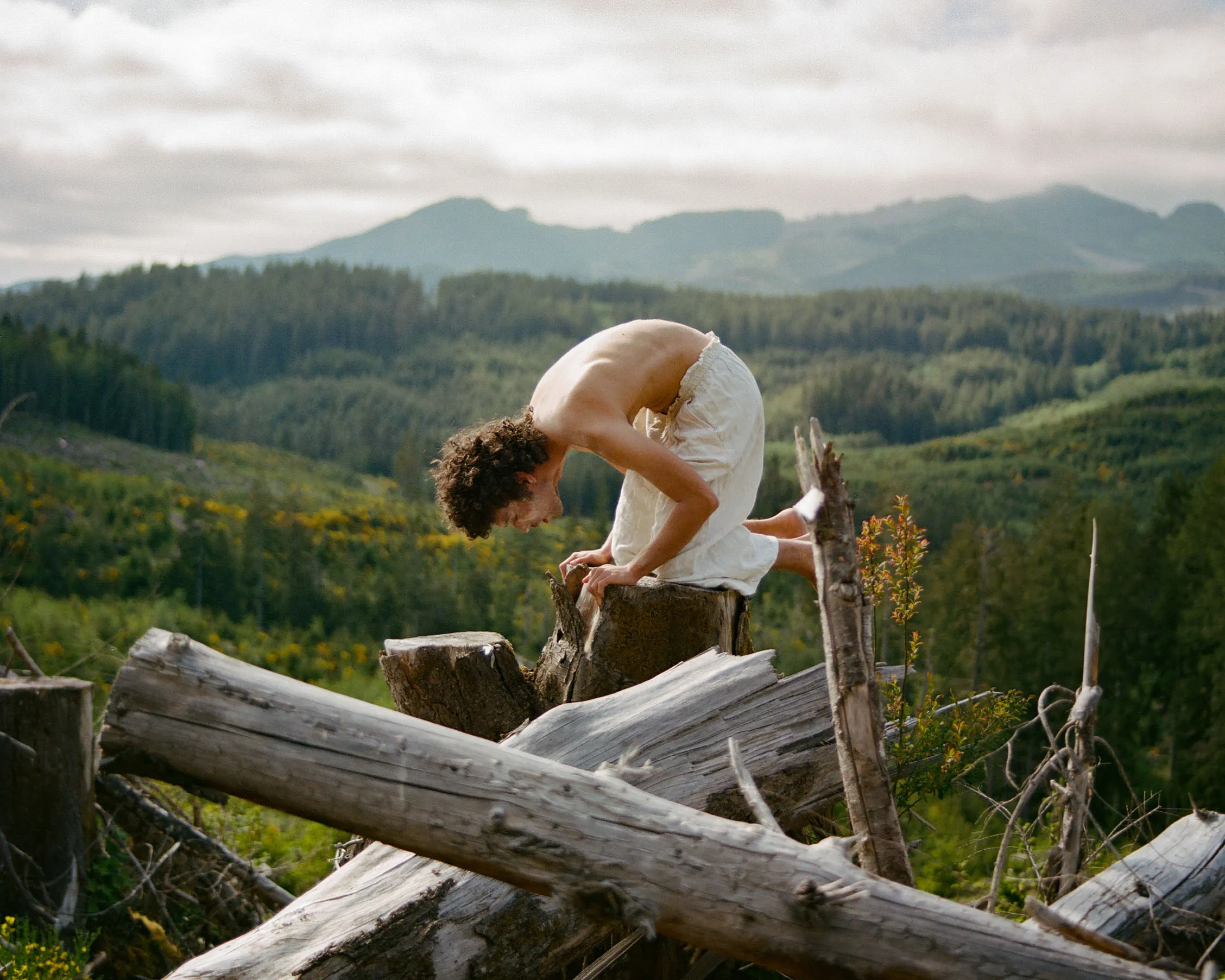
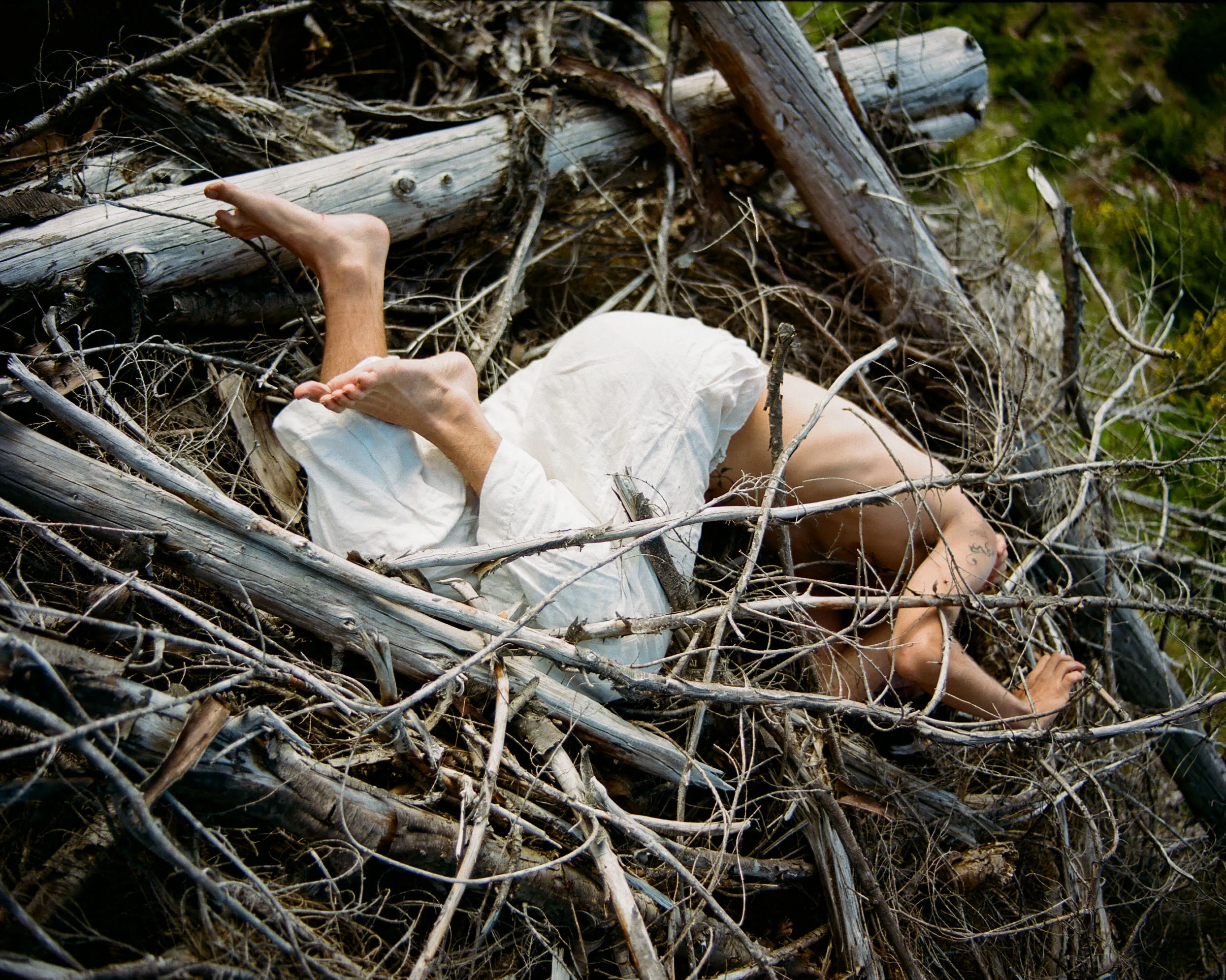
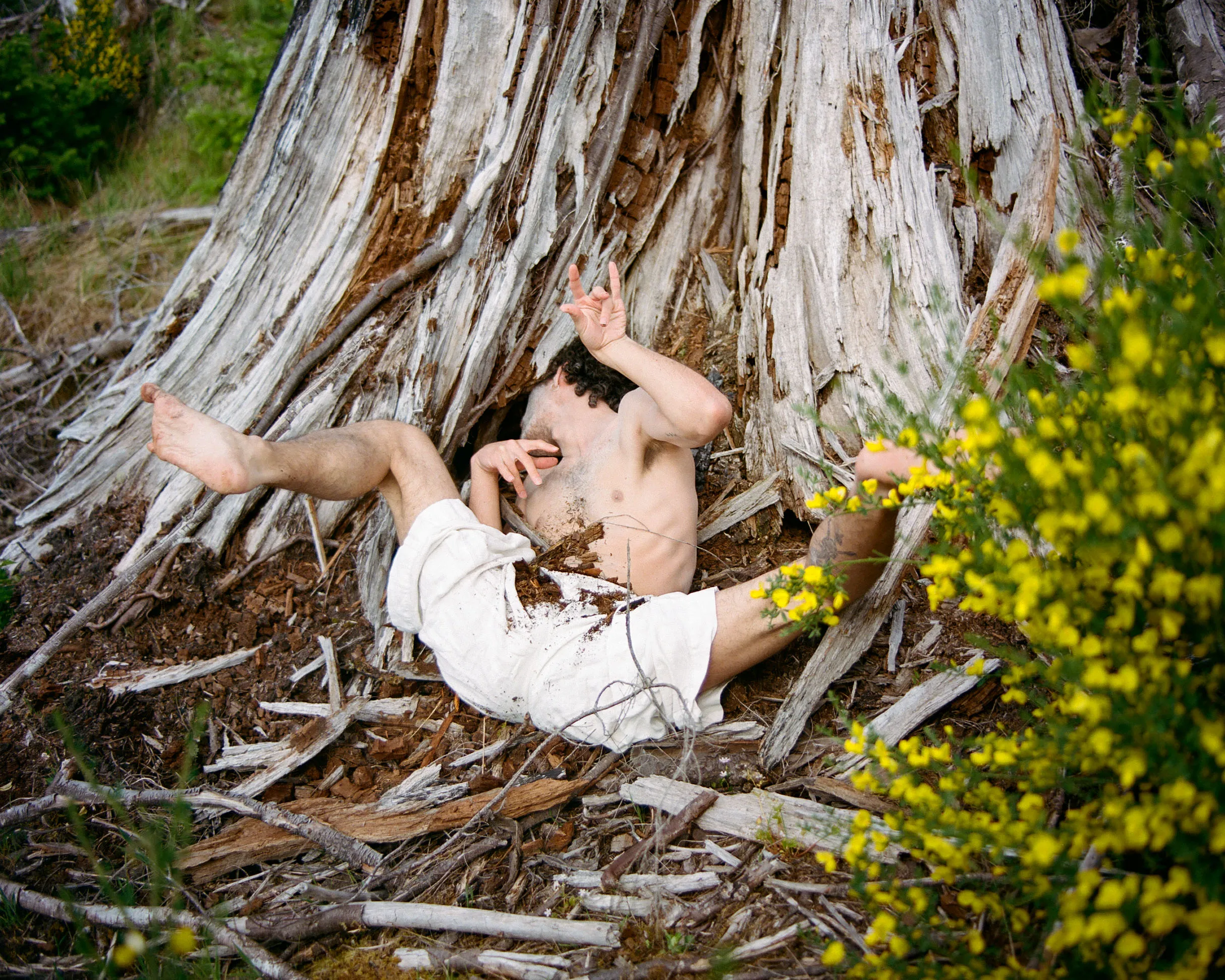
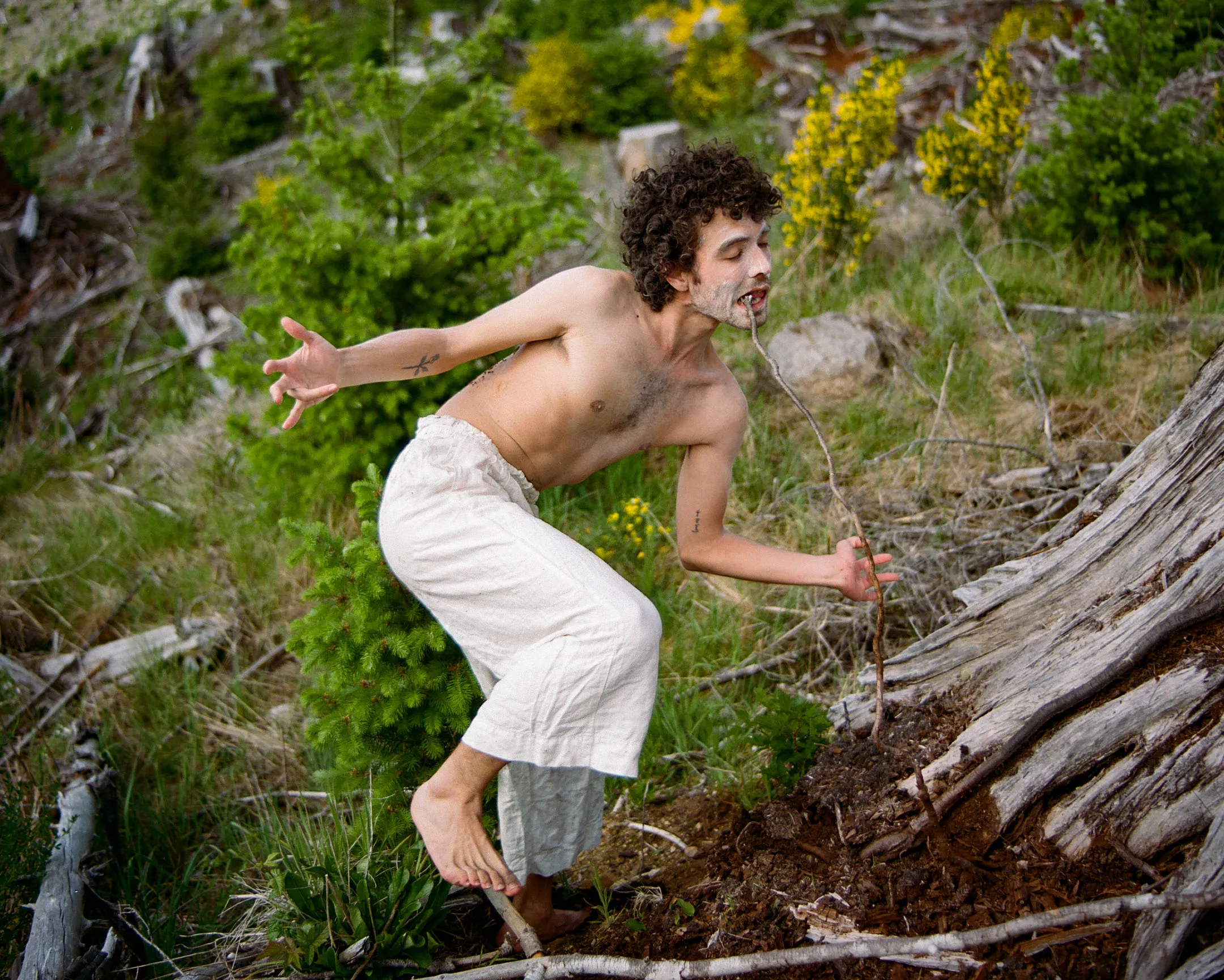
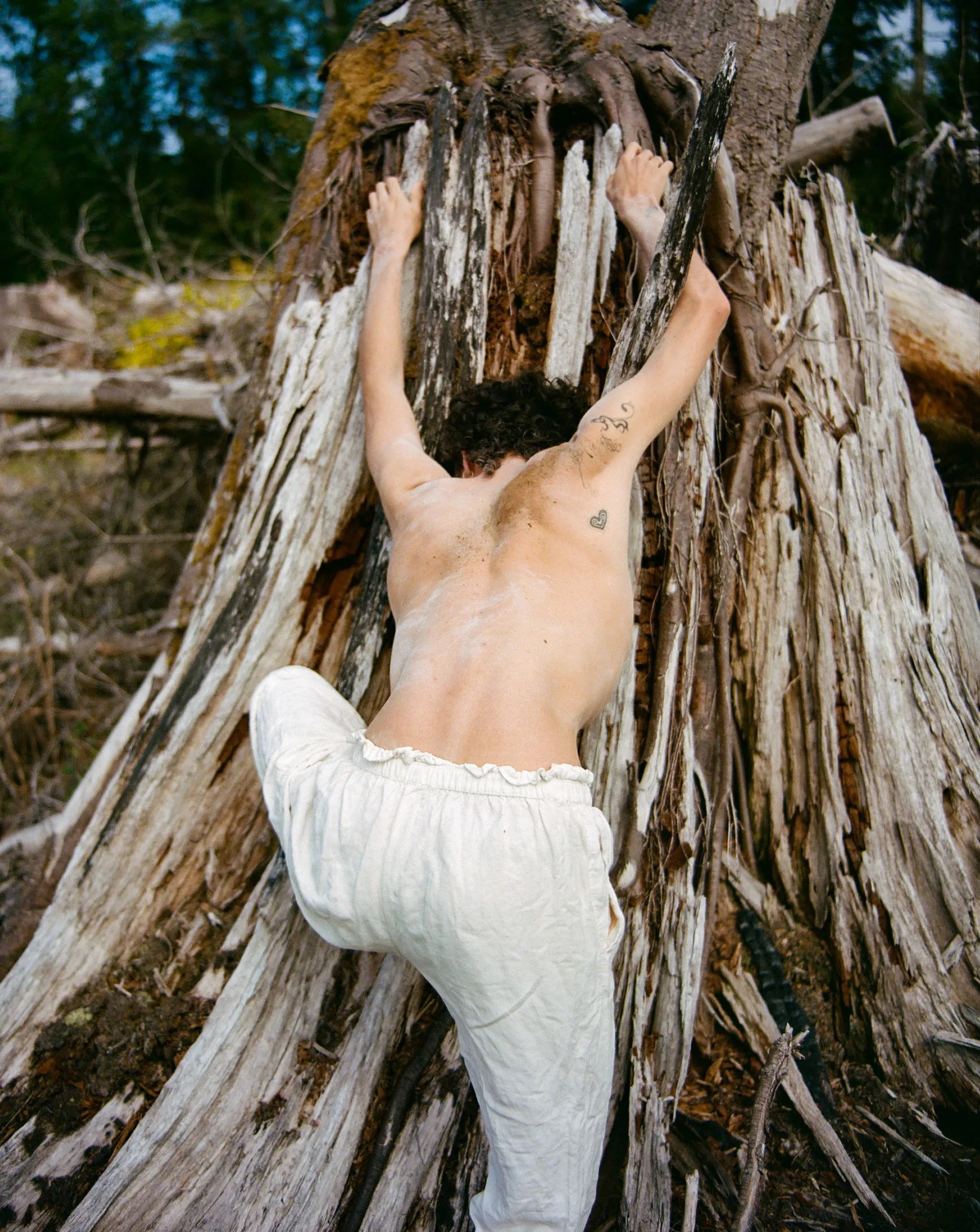
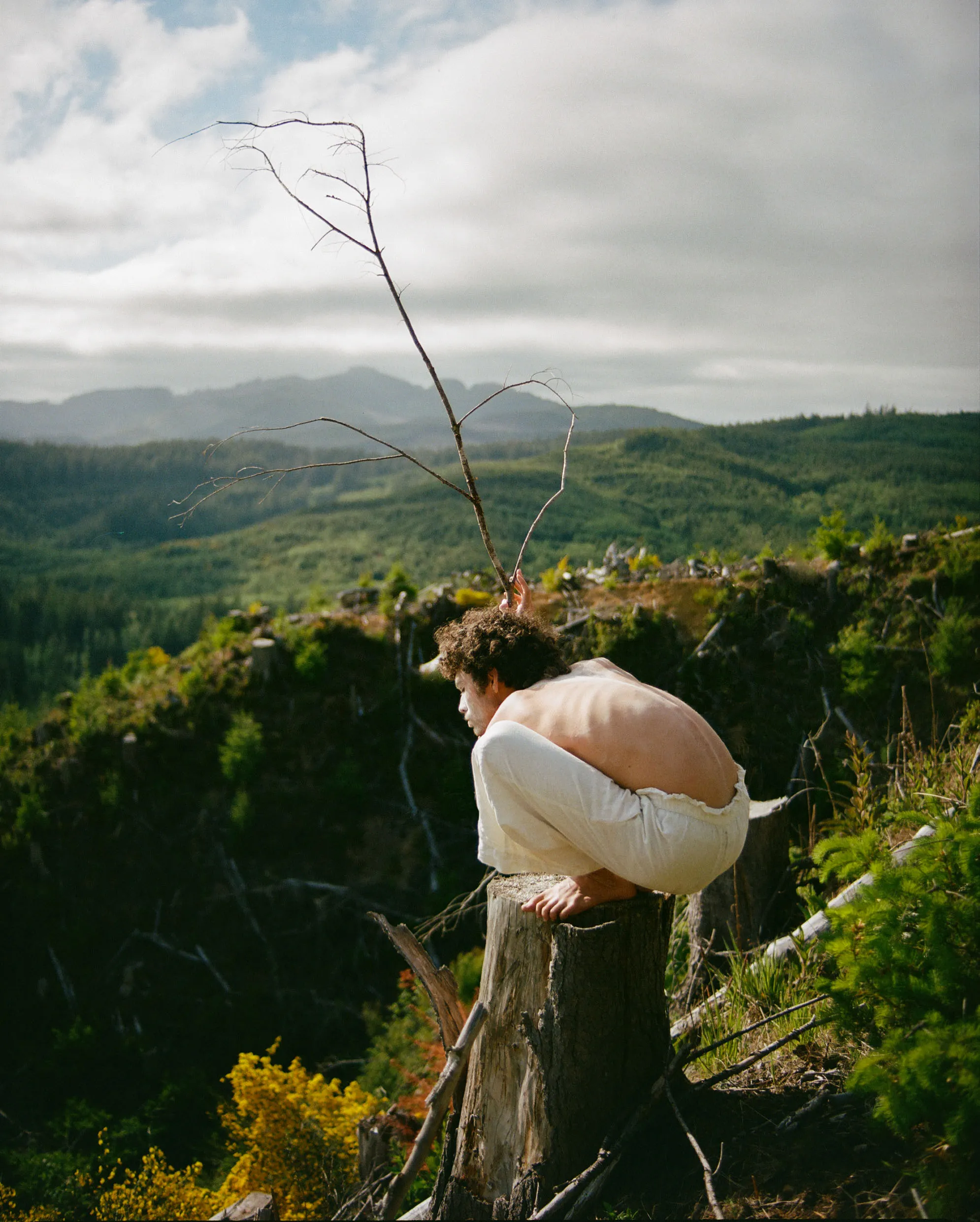
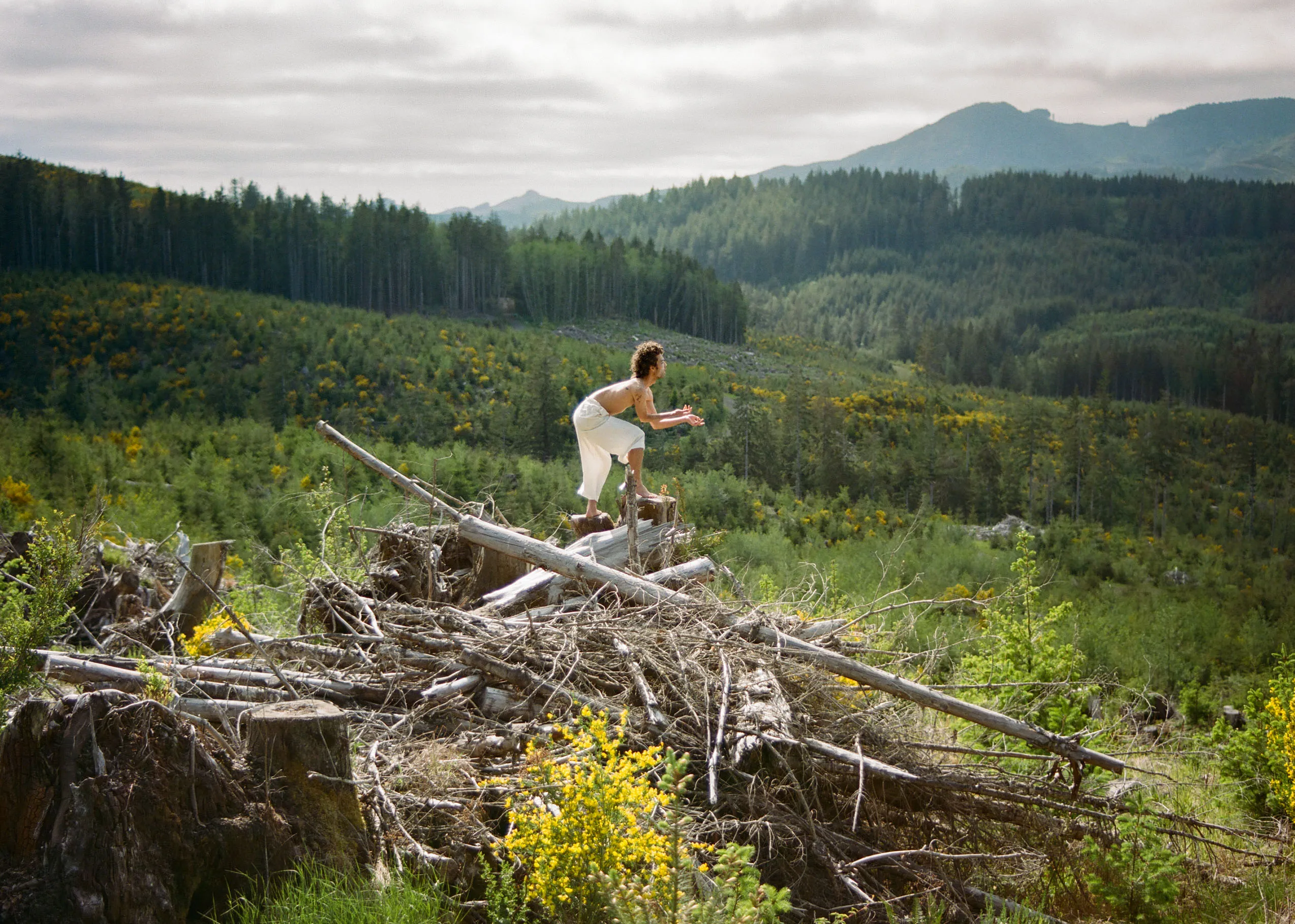
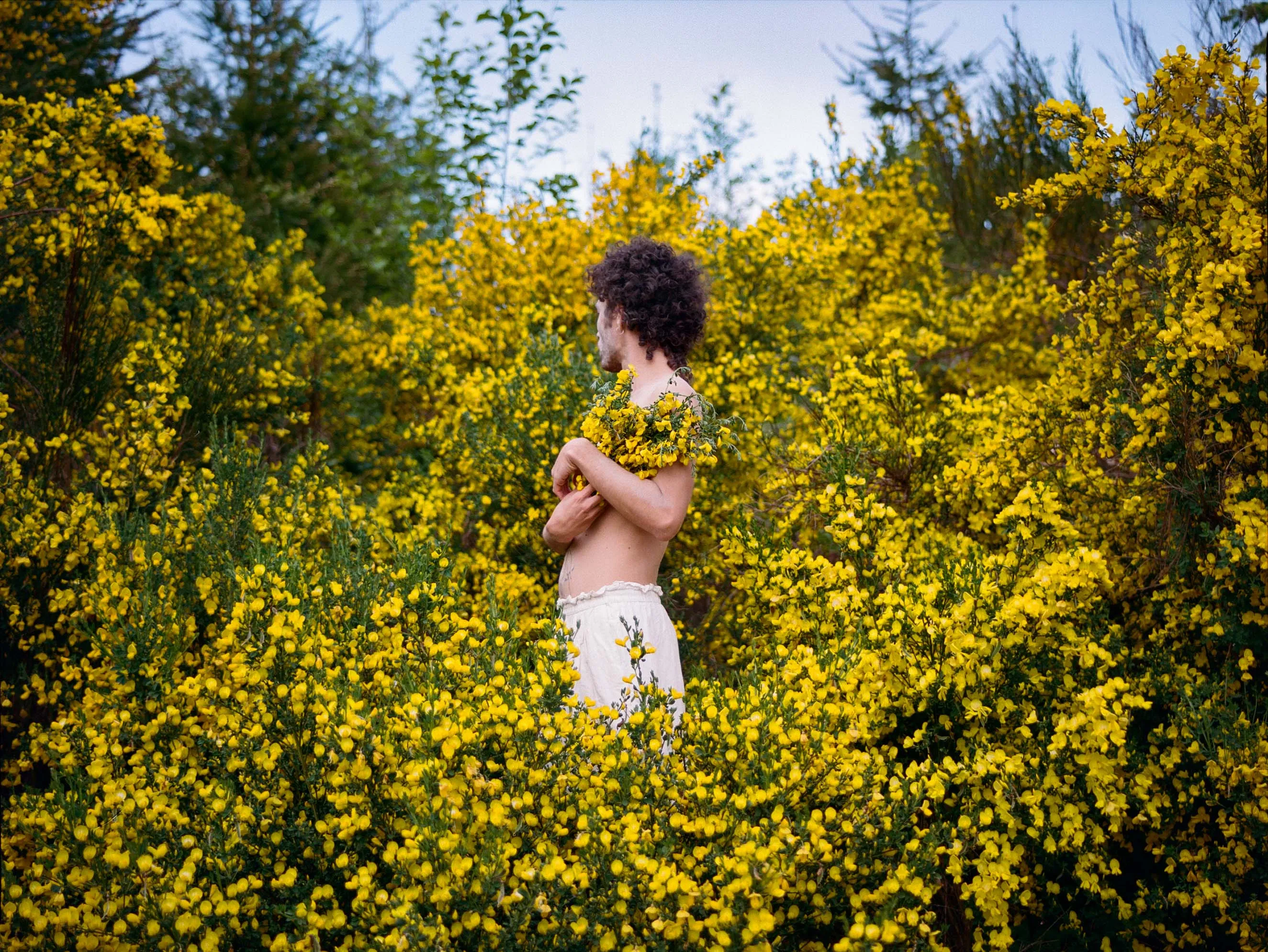
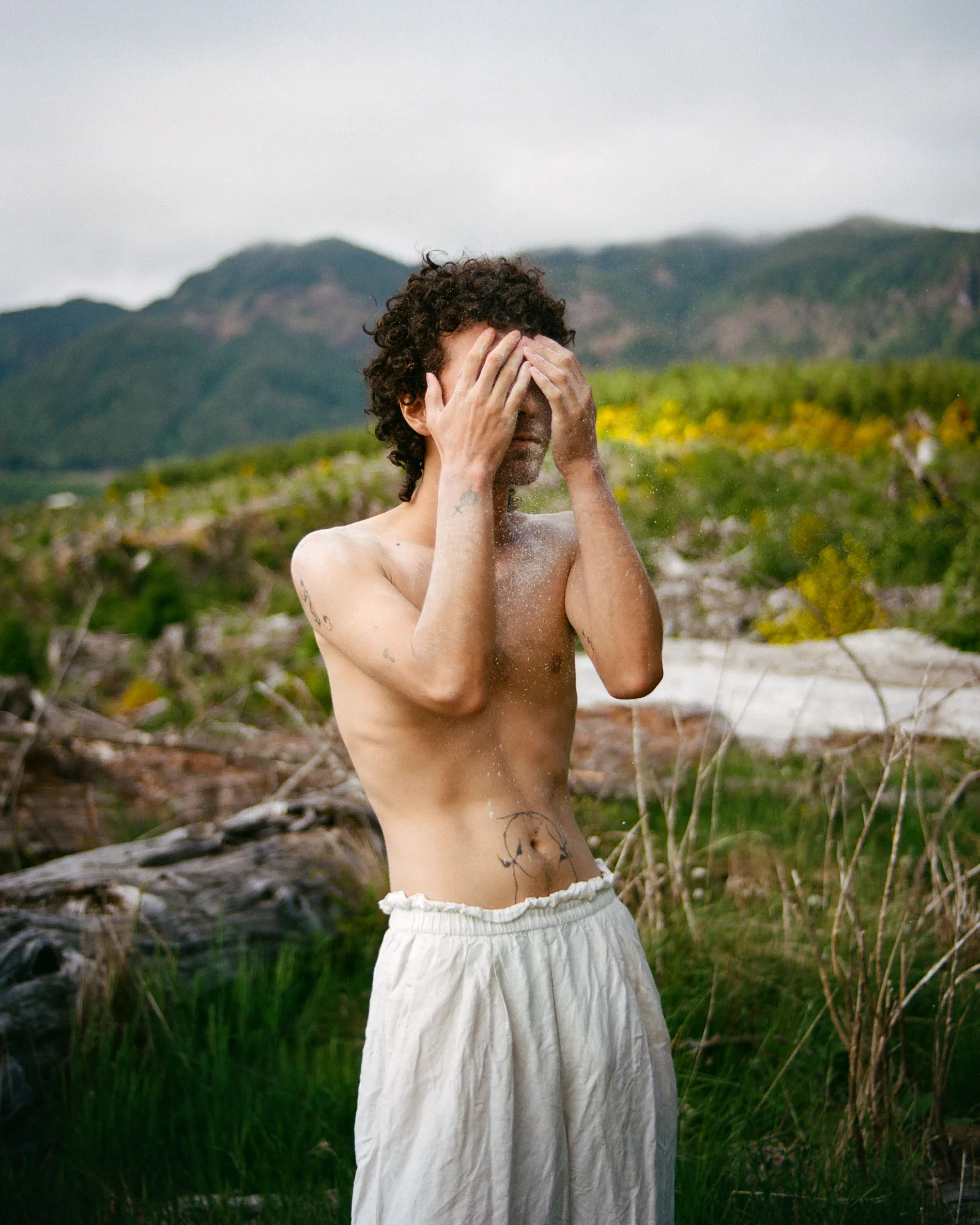
“A Petty Attempt at Reconciliation” is a collaborative performance and photography series with Kai Hynes. We spent an afternoon in a logged valley, testing the potential of disturbed landscapes as a muse and stage for butoh.
Emerging out of the upheaval of post-World War II Japan, butoh is an open-ended artform that embraces the idea of transformation through many embodied means. Performances will often take place in extreme environments and center grotesque or damaged subjects. As Kai defines it, butoh is an “empathetic practice” of becoming other, of being moved rather than moving.
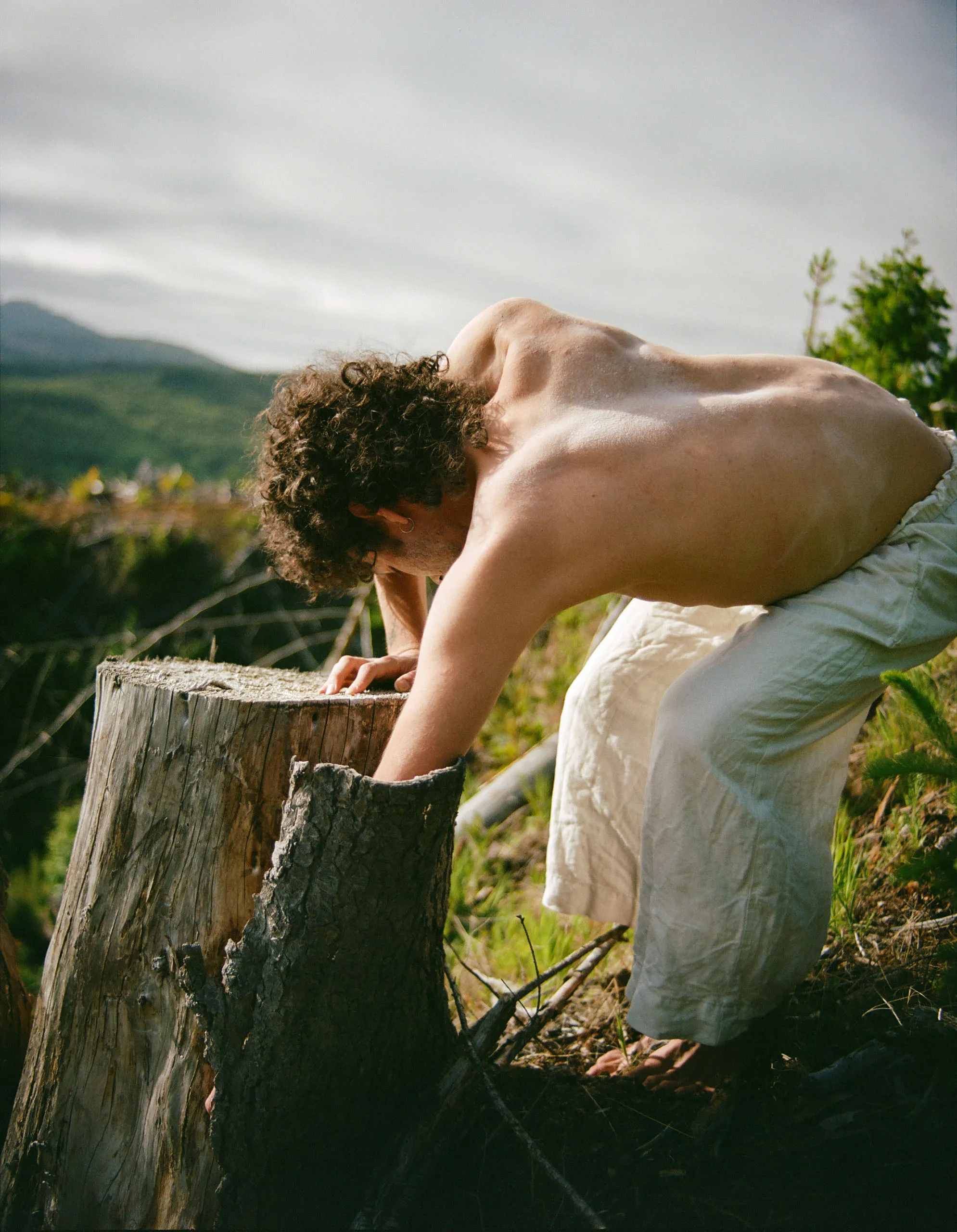
At the site, I saw Kai completely transform as he put on his white face makeup, shifting from the realm of logic (and Capital) to an unfixed animistic state. He interacted with his surroundings in truly radical ways: showering himself in charred wood chips, splintering his feet on rough stumps, and wielding sticks as fifth or sixth limbs.
Later, when I asked him what inspired his movements, he said he was “imagining what it felt like to be a tree stump.” Obviously, it is impossible to experience the sensation of photosynthesis or slurping water through deep roots, and even more so, what it feels like to have those lifeways permanently severed. But in his performance, he sought understanding through imitation. He animated himself as a tree in order to make sense of its death.
“It’s a petty attempt at reconciliation, because I’m part of the problem. I benefit from the extraction of these forests. But I wanted to temporarily meld with the environment while still acknowledging myself as an alien there.”
While artistic interventions such as this do not remedy the physical conditions of the forest, they are a technique for making peace with the land within the constraints of our historical moment. After all, the systems that proliferate extraction are too immense for any individual to shatter. Aside from collective action, we have our own personal performances to which the land itself is the audience.